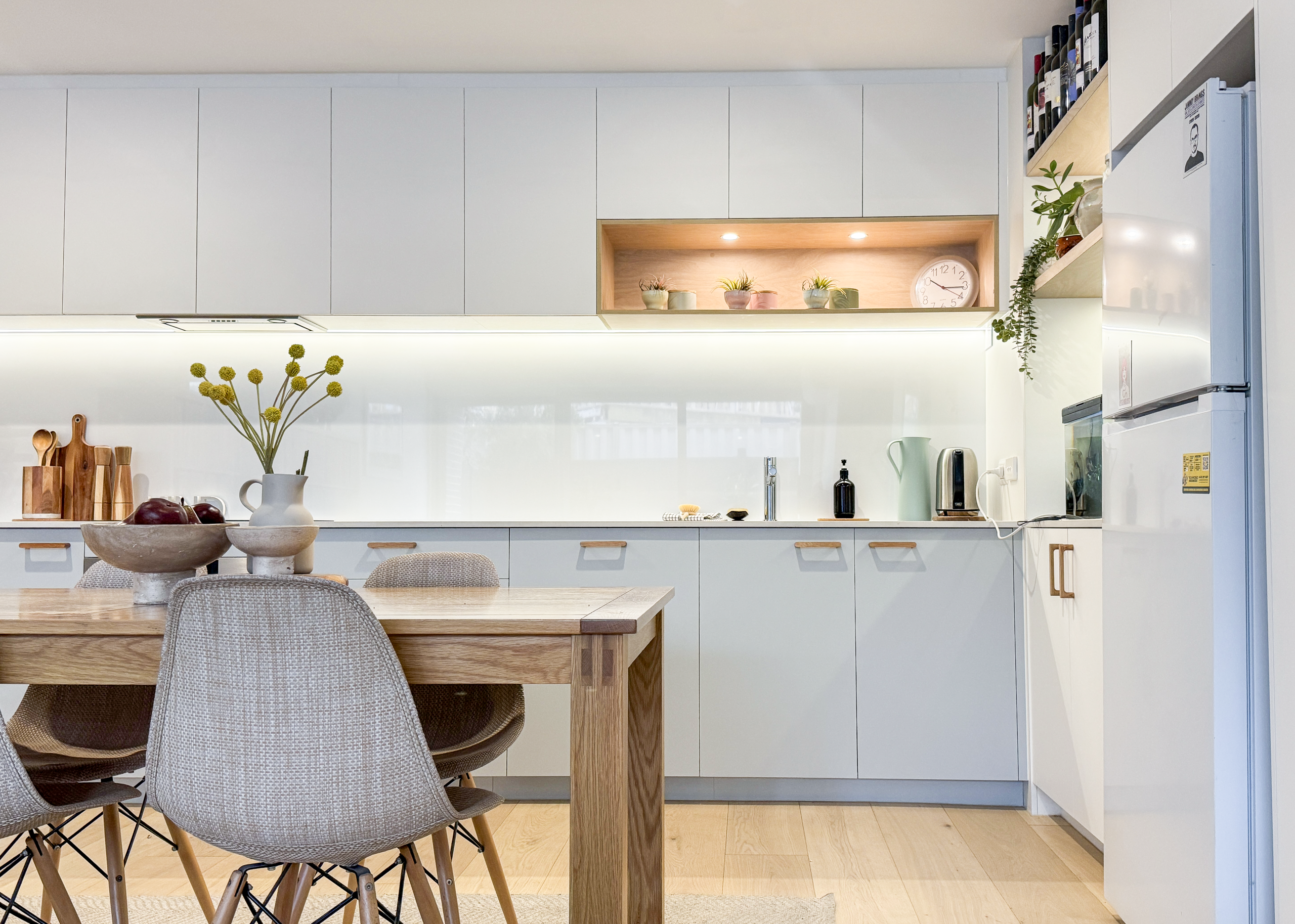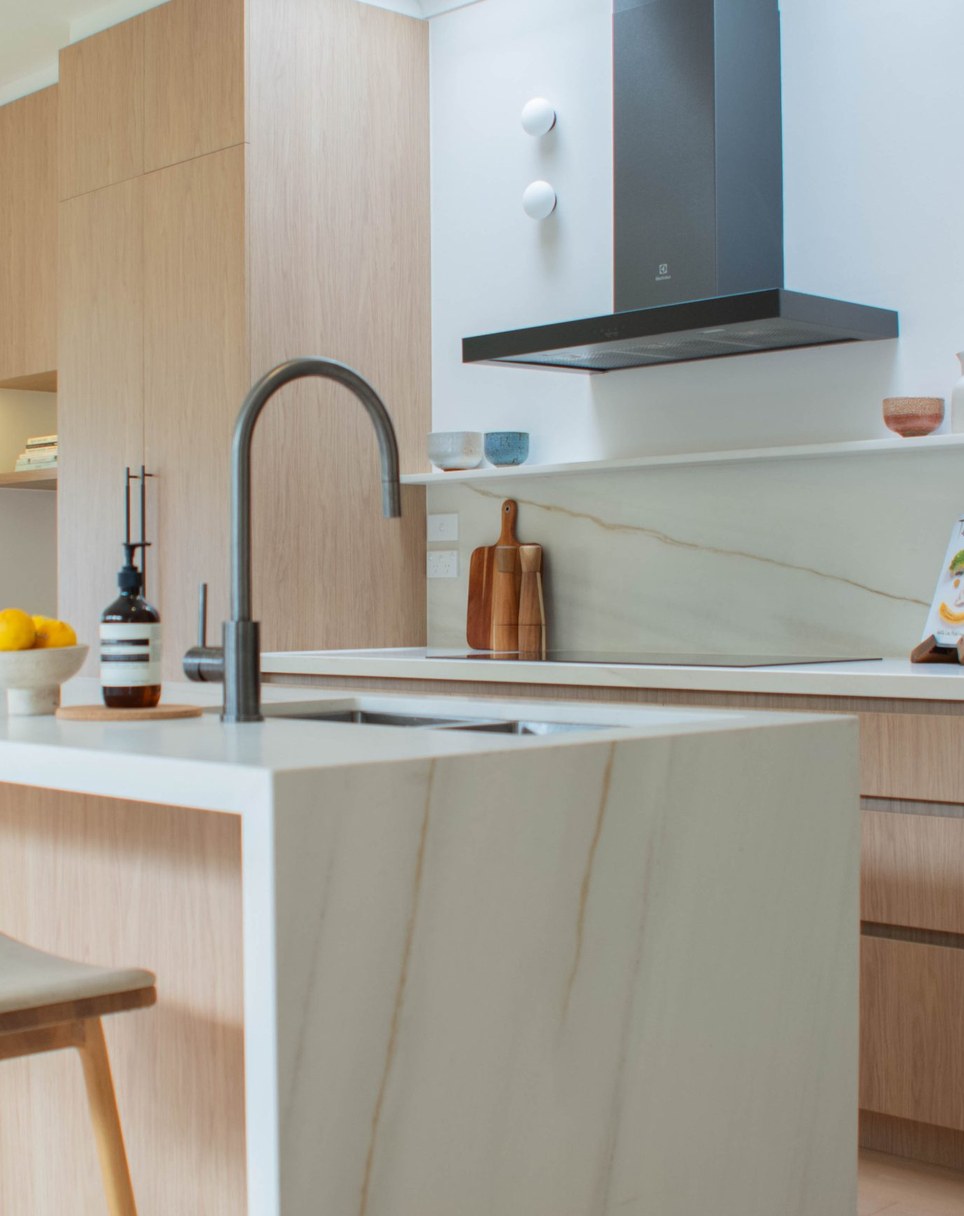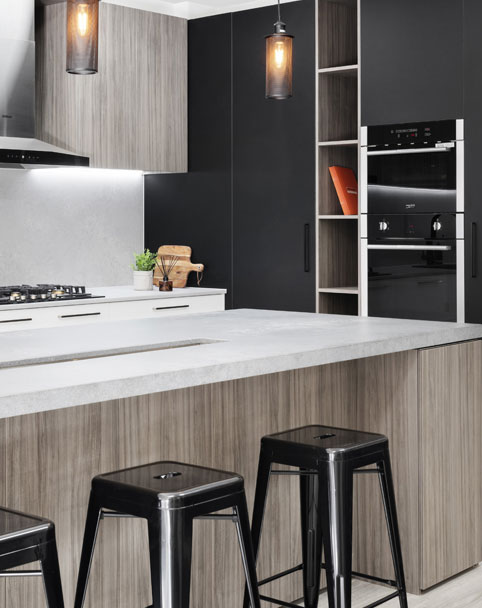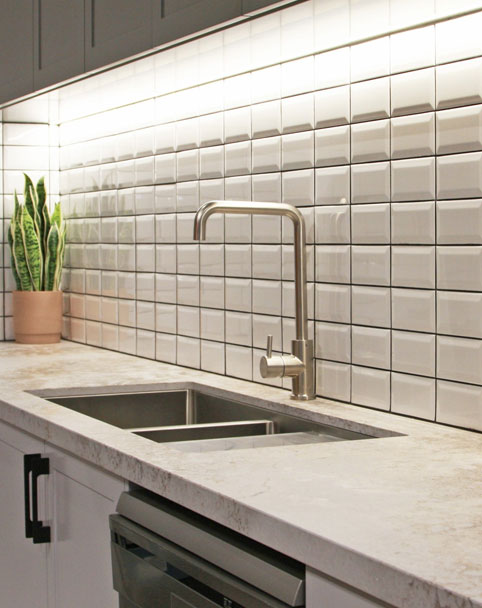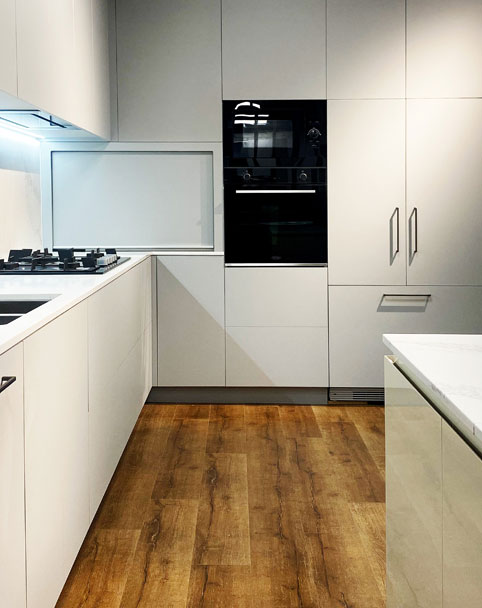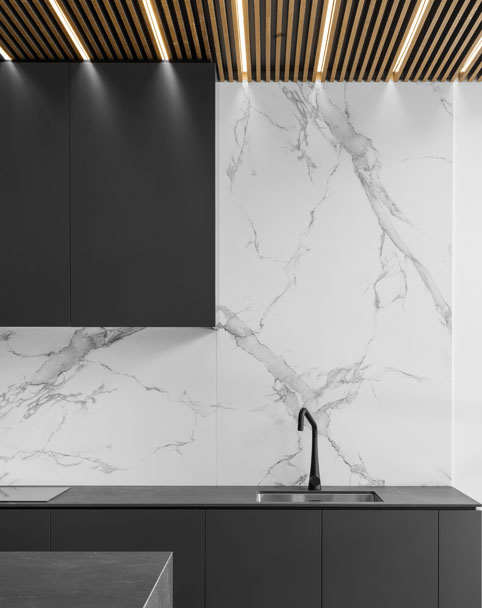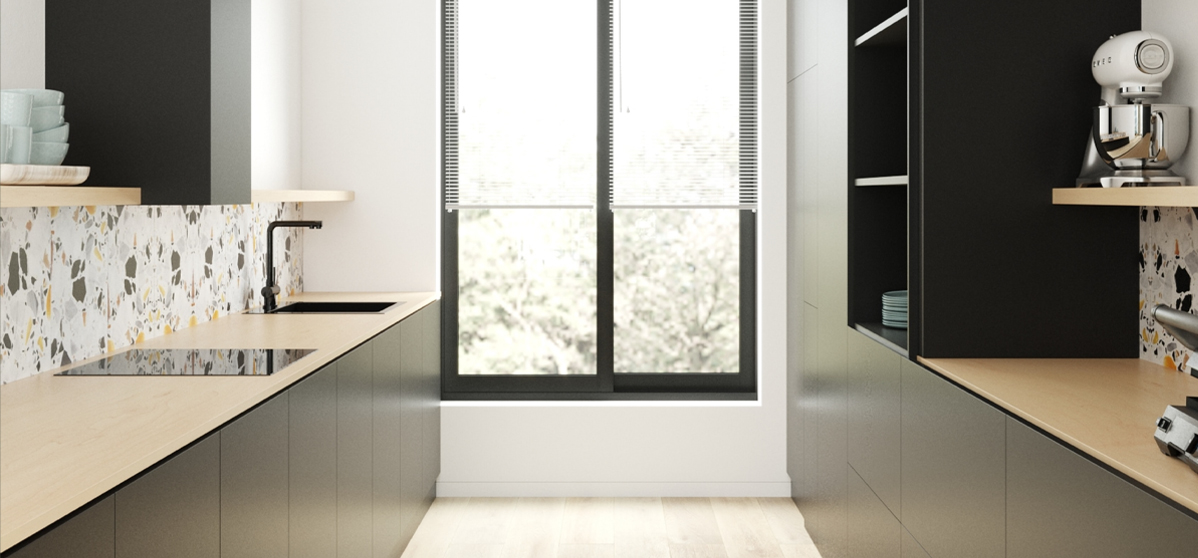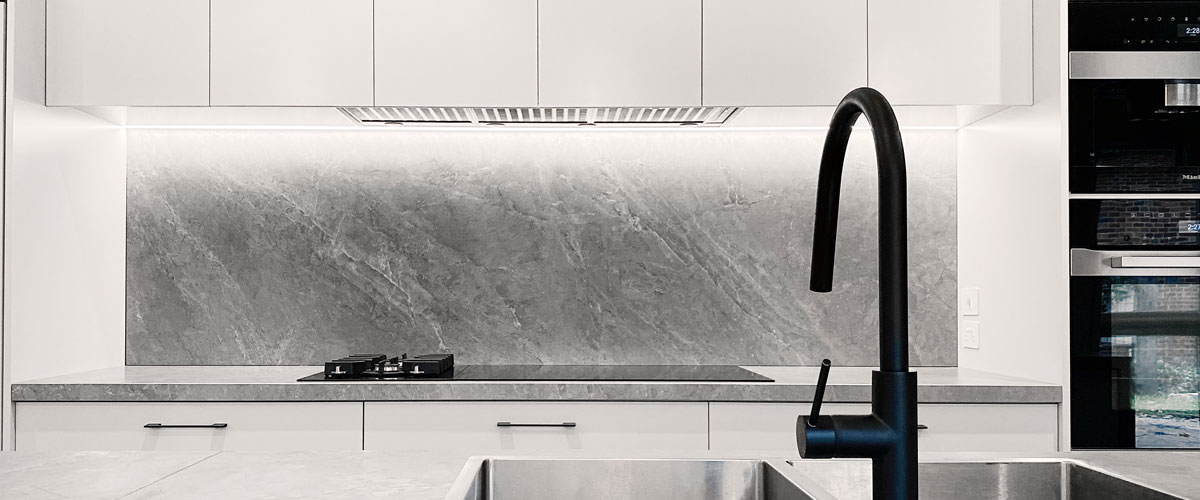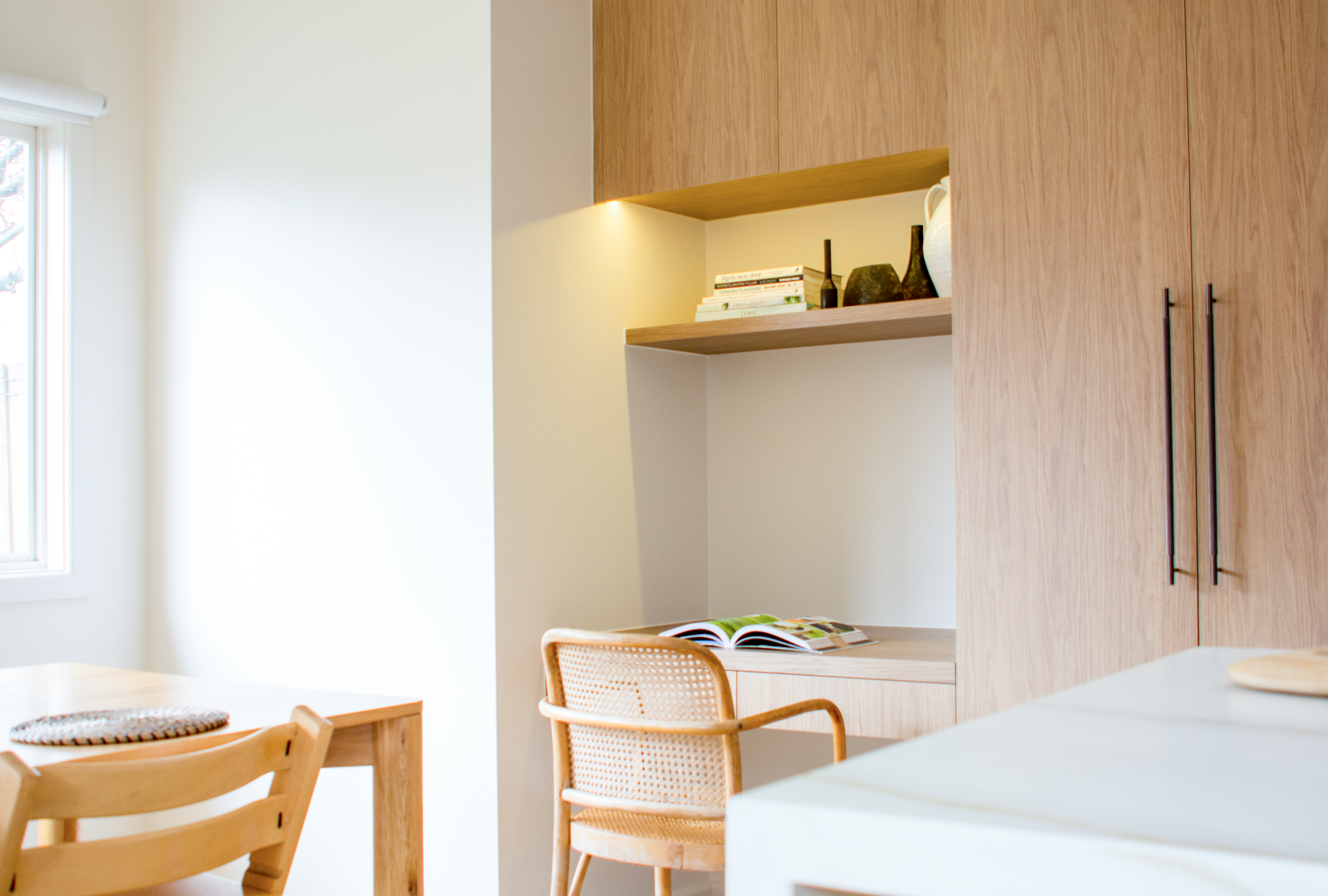
Timber is having a genuine resurgence in Australian kitchens. The timber-drenching trend, with its warm tones and natural textures, has moved from design editorials into everyday renovations, and for good reason. Timber kitchen cabinetry delivers the kind of warmth and character that painted finishes simply cannot replicate, while offering durability that holds up to decades of daily use.
This guide covers the most popular timber species, design options, maintenance realities, and what to consider when commissioning custom kitchen cabinetry for your home.
Why Does Timber Kitchen Cabinetry Endure?
Timber has been used in kitchens for centuries, not out of nostalgia, but because it works. Well-selected and well-built timber kitchen cabinetry balances warmth, structural strength, and design flexibility in ways that few other materials can match.
Wooden kitchen cabinetry also ages well. When finished correctly, timber develops a richness over time rather than simply looking worn.
Durability and Longevity
Timber species vary significantly in hardness and resistance to wear. Hardwoods commonly used in cabinetry score high on the Janka scale, meaning they resist denting, scratching, and compression under load.
Kitchen cabinetry durability depends on more than the timber itself. Precision joinery, quality substrates, and professional finishing all determine how well a kitchen performs over decades. Cabinets built with moisture-resistant materials and expert craftsmanship maintain their structure even in kitchens with daily steam and cooking activity.
Timber Species for Custom Kitchens
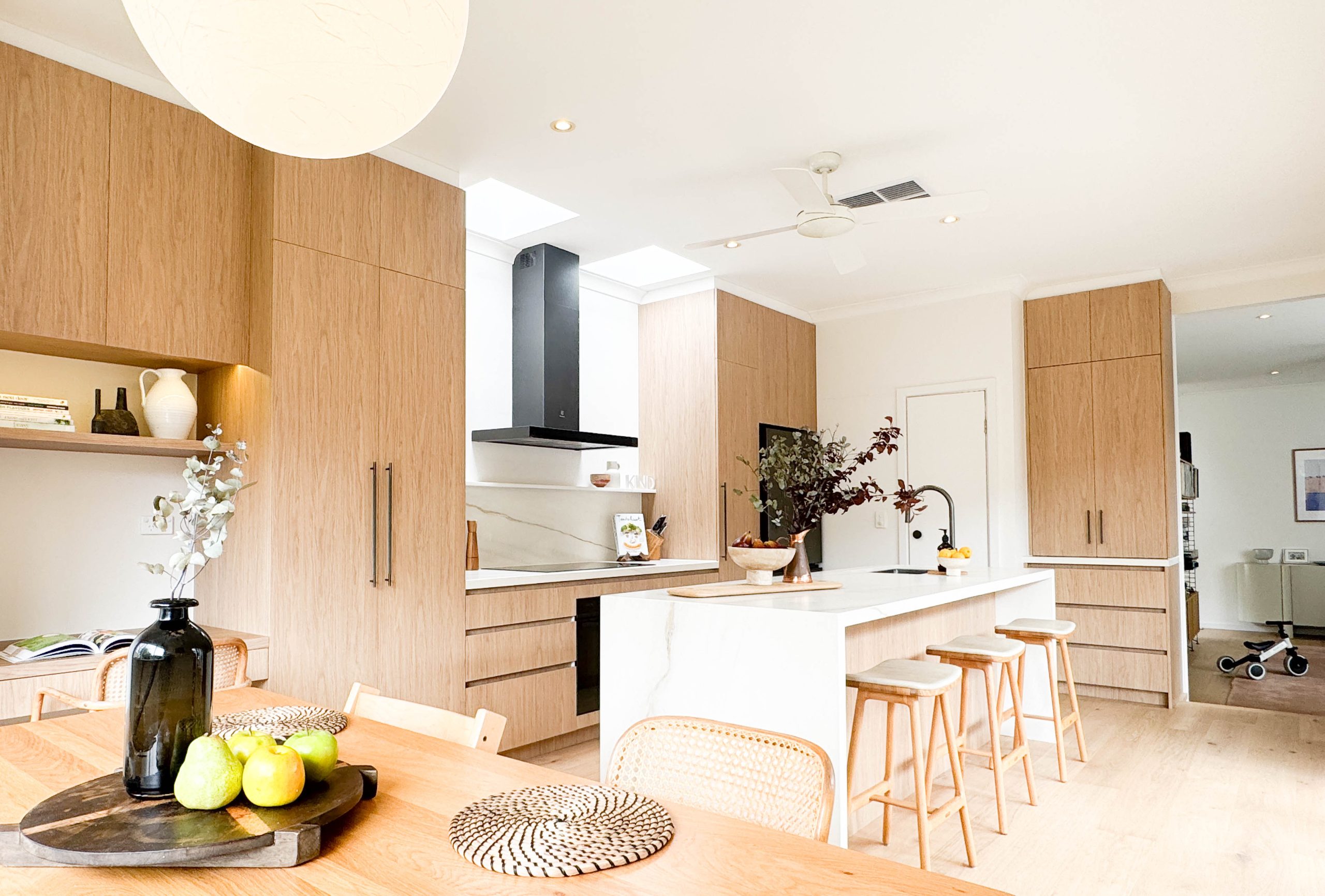
Choosing the right timber is one of the most important decisions in any kitchen renovation, forming part of the foundation of thoughtful kitchen design. The species you select affects the look, feel, and long-term performance of your cabinetry. Wooden kitchen cabinetry is available across a wide range of species, each with distinct grain patterns, colour tones, and hardness properties.
White Oak and Walnut: Premium Choices for Custom Cabinetry
White oak kitchen cabinetry has become one of the most sought-after options in contemporary design. White oak offers a tight, consistent grain with a warm, neutral tone that suits both modern and classic interiors. It is hard-wearing, stains well, and ages with subtle character rather than dramatic darkening.
Walnut kitchen cabinetry sits at the premium end of the market. Its rich chocolate-brown tones and bold grain make it a natural choice for luxury kitchens where cabinetry is intended to be a centrepiece. Walnut is dense and durable, though it requires careful finishing to protect its surface in high-moisture environments.
Other Popular Timber Species
Ash, cherry, and maple are also strong candidates for custom kitchen cabinetry. Ash offers pale, airy tones that work well in Scandinavian-influenced kitchen designs. Cherry deepens to a warm reddish-brown over time.
Maple provides a smooth, consistent grain that suits minimalist and contemporary aesthetics.
How Versatile Is Timber Kitchen Cabinetry?
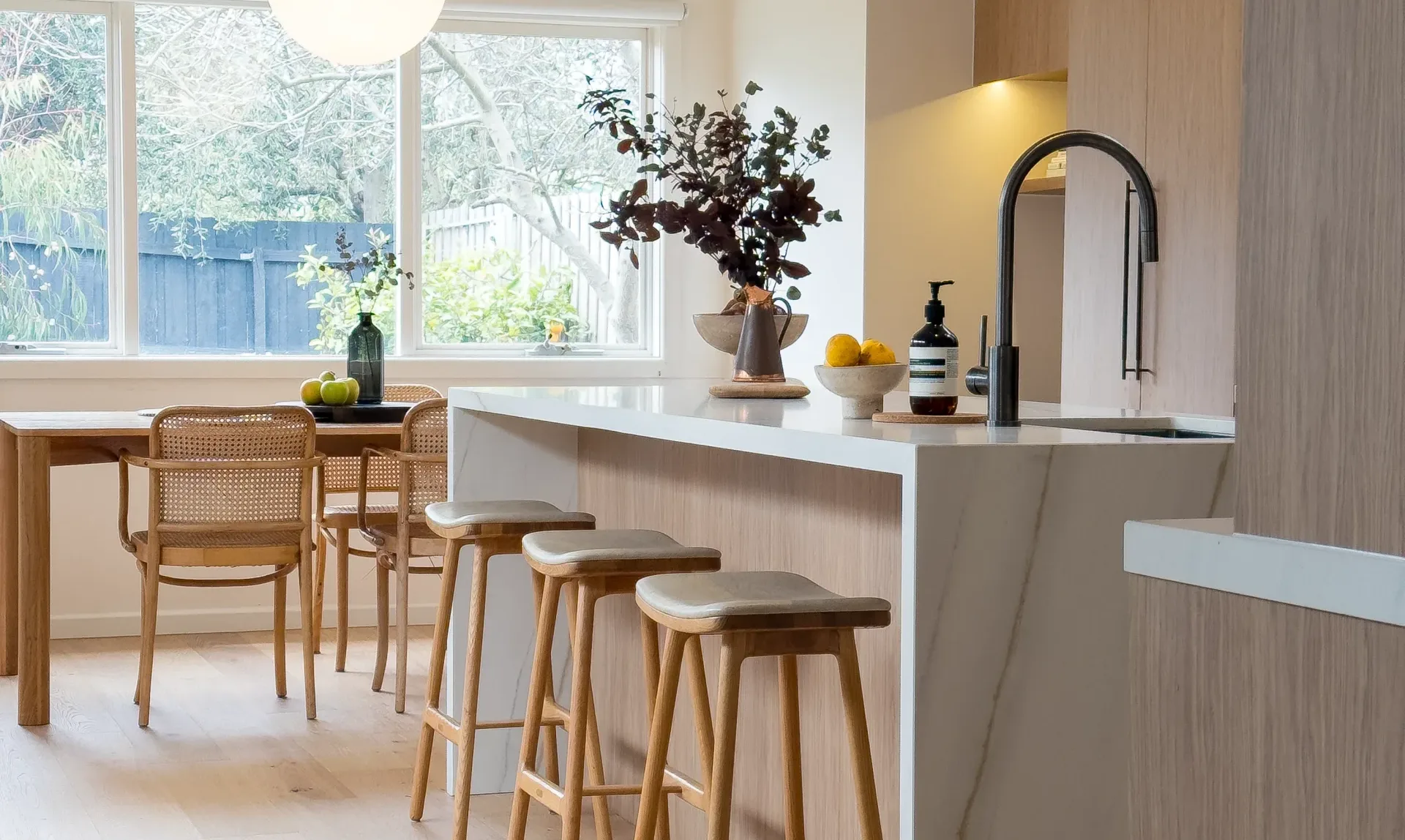
One of timber's greatest strengths is its adaptability across design styles. Timber transitions naturally between contemporary, Scandinavian, coastal, and classic styles depending on species selection, grain orientation, and finish.
Modern Timber Kitchen Designs
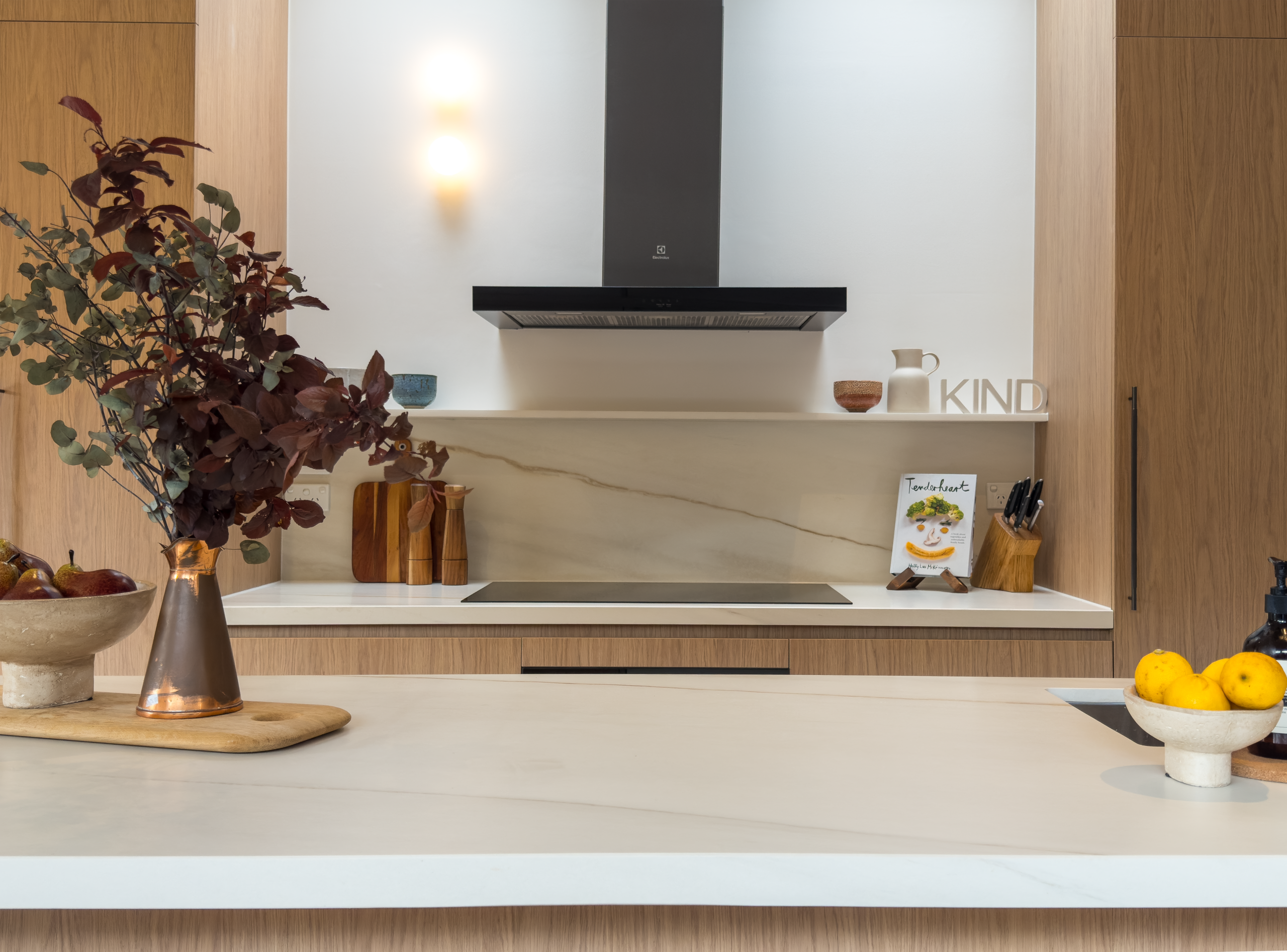
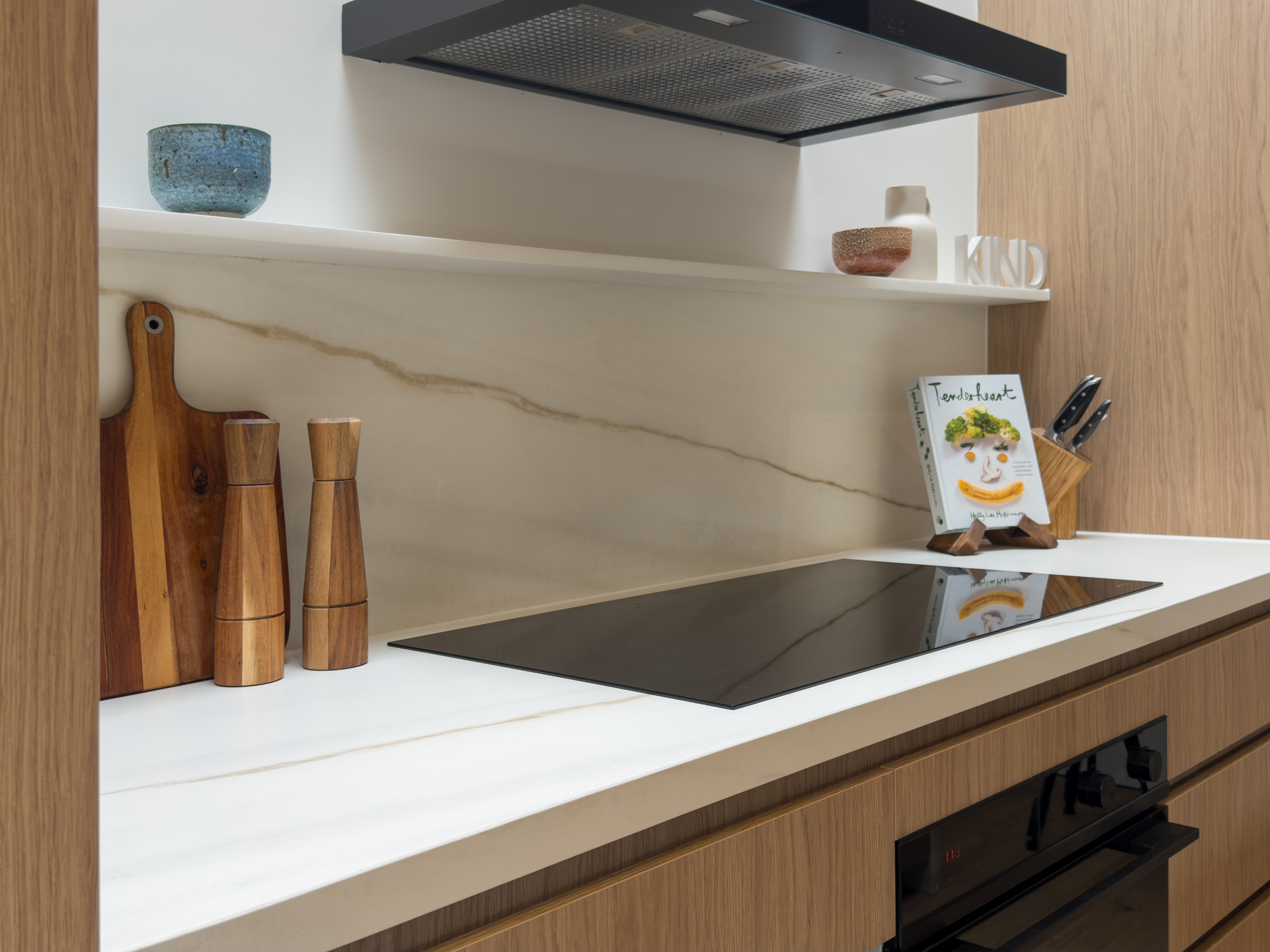
Modern timber kitchen designs range from sleek, handleless cabinetry in white oak to rustic farmhouse aesthetics in rough-sawn hardwoods. Material pairing amplifies the result: timber cabinetry combined with engineered stone benchtops and refined hardware creates a layered, cohesive aesthetic. The contrast of warm wood grain against cool stone is a particularly effective choice in contemporary kitchen designs, where texture becomes the primary design instrument.
Maintenance, Care, and Kitchen Cabinetry Durability
Timber cabinetry requires straightforward care rather than demanding maintenance. Wiping surfaces with a damp cloth after cooking, avoiding prolonged moisture exposure, and addressing spills promptly are the core habits that extend cabinet life significantly.
Finish selection affects long-term kitchen cabinetry durability. Natural oil finishes are penetrating and easy to spot-repair, but require periodic reapplication. Lacquer and water-based clear coats offer a harder surface barrier, resist staining, and require less regular maintenance, making them a practical choice for busy family kitchens.
Timber kitchen finishes should be chosen based on how the kitchen is used, not purely on aesthetics. A design consultation helps match finish type to your household's actual needs.
Sourcing Sustainable Timber
Timber cabinetry is one of the more inherently sustainable choices in kitchen design. A well-built custom kitchen in quality hardwood can last 20 to 30 years or more without replacement. This longevity represents a significant reduction in materials, waste, and energy compared to cabinetry that needs replacing within a decade.
FSC certification and responsible harvesting practices are standard expectations when sourcing timber through reputable suppliers. At KIND Kitchens, we prioritise certified timber sources and work with reputable suppliers who meet responsible harvesting standards. Sustainable kitchen cabinetry starts with species selection by prioritising certified sources and avoiding timbers harvested from old-growth or unregulated forests.
Frequently Asked Questions
Build Your KIND of Timber Kitchen
KIND Kitchens designs and builds custom timber kitchen cabinetry for Melbourne homes, starting with a thorough understanding of how you use your space. Every project begins with a free consultation, followed by 3D visualisation, in-house manufacturing, and professional installation, all coordinated by our design team.
Our kitchens are backed by a 10-year structural warranty on joinery, giving you confidence in the long-term quality of your investment.
Book a free consultation with KIND Kitchens to explore timber species, finishes, and layouts suited to your home. Or speak with our designers about your kitchen renovation and how timber cabinetry can be tailored to the way you actually live.